Frame Restoration

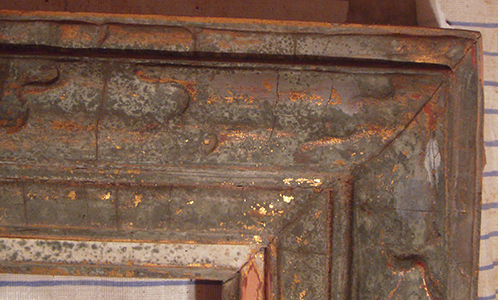
A little over a week ago, I was visiting my great-uncle (the one who designed the Moran tugboats I painted), and he more or less bequeathed to me several large, old wooden frames, if I thought I could use them. Wooden frames covered in blue-green mildew.
FrameRes1

What would you think?

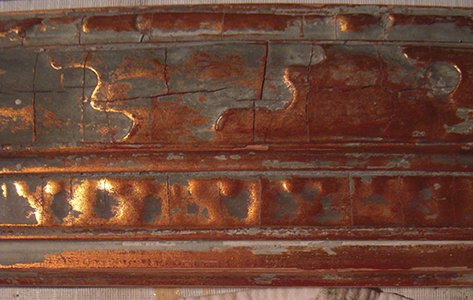
I thought, “Yes!” Frames are expensive, and with a lot of care and clean-up these could look very nice again. And I can do that work. It’s a lot of work, but very doable. I started with the biggest, most textured frame, and it’s cleaning up slowly but nicely. You can see the original shiny finish.
FrameRes2

So if you find yourself with old, mildewed frames to clean, rather than chuck them, here are some restoration tips:

1. Sand, man. Get a good rough grit (60 or 80). If your frame is flat, you can use a hand-sander. If it’s grooved, rounded, or textured, you’ll have to sand by hand. (It’s helpful to set the frame up on horses.) Once you get the brunt off, you can switch to a finer grade for smoothing (120 or higher).

2. Ay, there’s the rub. Get an old rag, dab it with rubbing (isopropyl) alcohol and wipe the mold off. More vigorous rubbing is required the more mold there is. You can also pour the alcohol right on the frame and let it soak thirty seconds. Use cotton swabs or Q-tips for small and detailed areas.

3. Bleach. Some people mix water, bleach, and dish detergents and rub, but you have to be careful of proportions so you don’t change the color of the frame. Others dunk the frames in a bucket of the solution, but my frames are too big for that. I have not tested this method, so I don’t know how well it works.

4. Sand some more!

5. Plaster. If there are lots of cracks (especially found on older, ornate frames) and you don’t want the frame to have too much character, you can spread plaster or putty to fill the cracks. Then smooth everything by sanding and, once the plaster dries, proceed to tip 6.

6. Paint it. Once you’ve thoroughly cleaned the frame, repaint it. Metallic paints provide a classic finish. When done, make sure you put a picture in it!
A Night Off the Mississippi

Last Friday, I attended the monthly meeting of the Mississippi Mud Daubers haiku group. An elder Principia friend invited me to attend, the same who treated me to the Cradle of American Haiku conference in Mineral Point, WI, last summer. She, along with two other poetically-minded (or at least interested) Principia adults, journeyed to Edwardsville, IL, for a delightful little gathering.

We met in a little cafe, about 10 poets strong–probably the biggest group they’ve had. And once again, I was the youngster. =) I just walked up to the table, and it was like I had been attending for years. Everyone was incredibly welcoming. After brief introductions, everyone shared recent news & accomplishments (eg., poems published in journals and anthologies, haiku talks given). I was asked to recite my poems in Frogpond, which were received with smiles. Then, after or over a light supper, we read and reviewed each other’s poems. Essentially, this consisted of shuffling sheets of paper along the tables without dripping water or pesto on them as you wrote comments. Lots of positive feedback and constructive criticism on all accounts, and some beautiful imagery. When the bouts of editing finished, everyone merrily dispersed.

I’d share some of the poems I took, but I plan to submit them to haiku journals, and, naturally, they will not accept previously published material, including poems posted on blogs. So stay tuned; I’ll let you know when they hit the press!

Introducing Aerth

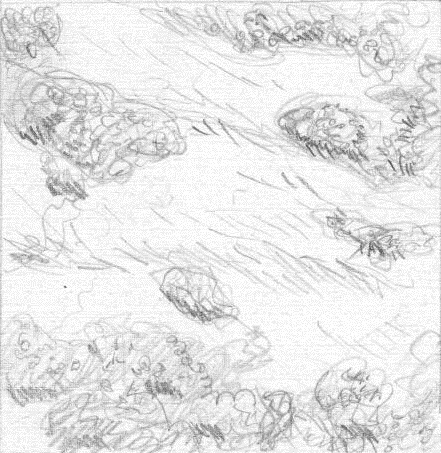
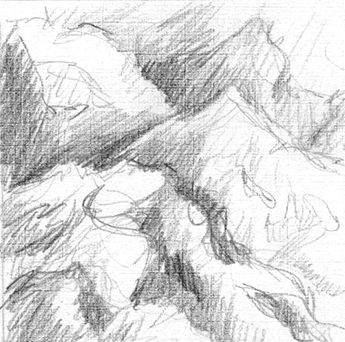
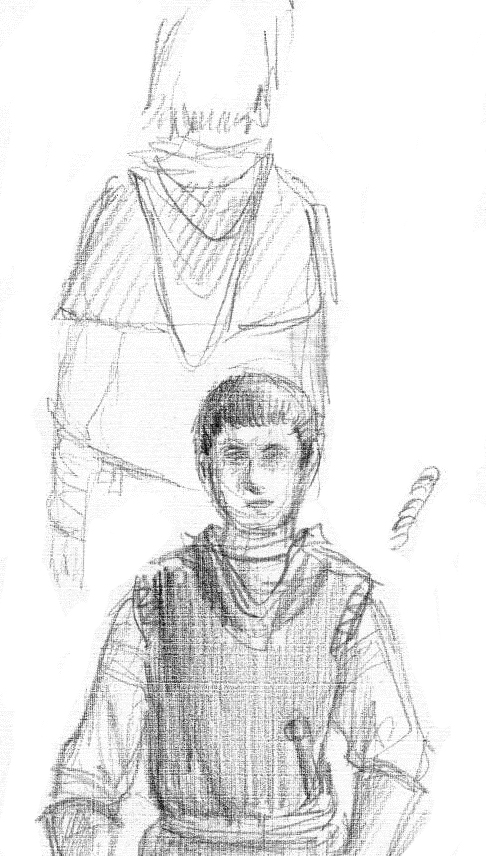
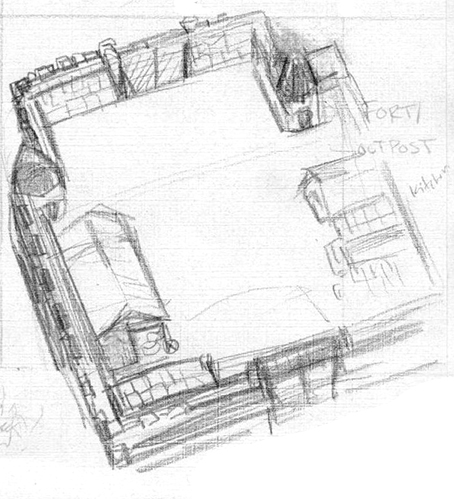
AerthP-11As briefly noted last week, I’ve joined a team that is developing a board game prototype. The game, currently called Aerth: Tides of War, is a tactical conquest game; several invented cultures and civilizations compete for territory and provisions. Some of the cultures are based on historical peoples and periods, such as the Roman empire and the Northern Renaissance, while others are more mythological in their origins, based on creatures and races, such as the giants of Scandinavian folklore. Each civilization has a series of troop tiles, eg. pikemen, knights, village levy, that advance across a system of interchangeable terrain tiles rather than a board. Think of it as a world map you can rearrange.

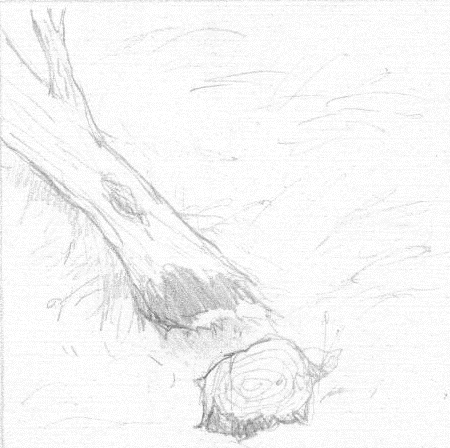
My task is to design the various tiles. Aside from researching medieval arms, armor, attire, and architecture (the 4 A’s) to draft troop sketches, I’ve worked mostly on sketching terrains. The first batch of tiles contains 12 different terrains (6 double-sided tiles), and I’m approaching a point where I can start color images for most of the 12. Next on the roster: the first civilization troops, based on the medieval Britons.


All About August

Just for fun, I reread posts from August 2014 to see some of what artistic things I did a year ago. Some highlights: finishing the Alice Moran (tugboat) painting (framed & delivered Sept. 2014), planning Pandagrams, and starting an illustration commission for Do You Have a Pebble in Your Pocket?

If you’d like to revisit those posts, too, just type a keyword such as “panda” in the search bar (top left, just under the colorful Racing Pajamas header). The results page shows several posts & pages; scroll down & click “older posts” (at the bottom of the list) to see more results.

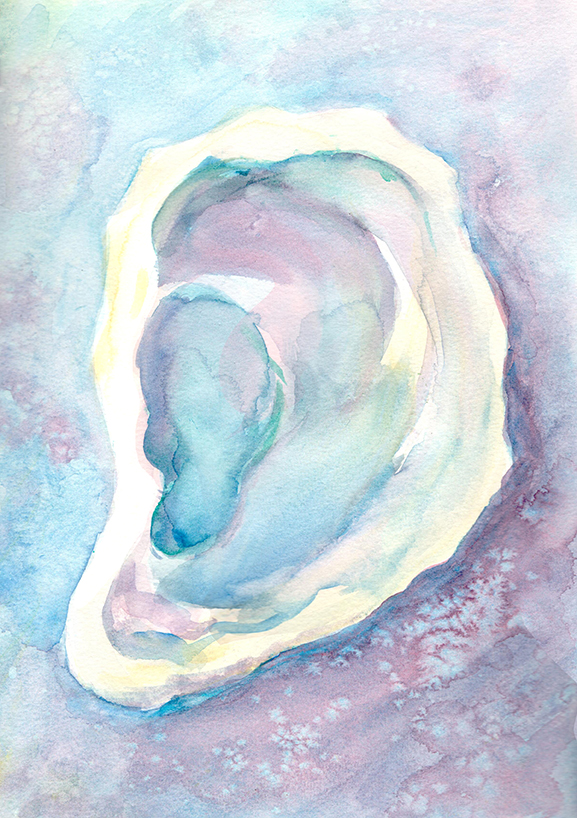
Having looked a year back, you might wonder what new things I’m doing now. First off, I’m painting a series of shells in watercolor, and I’ll likely print a couple of them as notecards. (Previews peppered about this post.) Second, I’m celebrating that we’ve gained a blog subscriber this week–hooray! Third, I’ve been recruited to do art for a board game–fun! More on that next time.